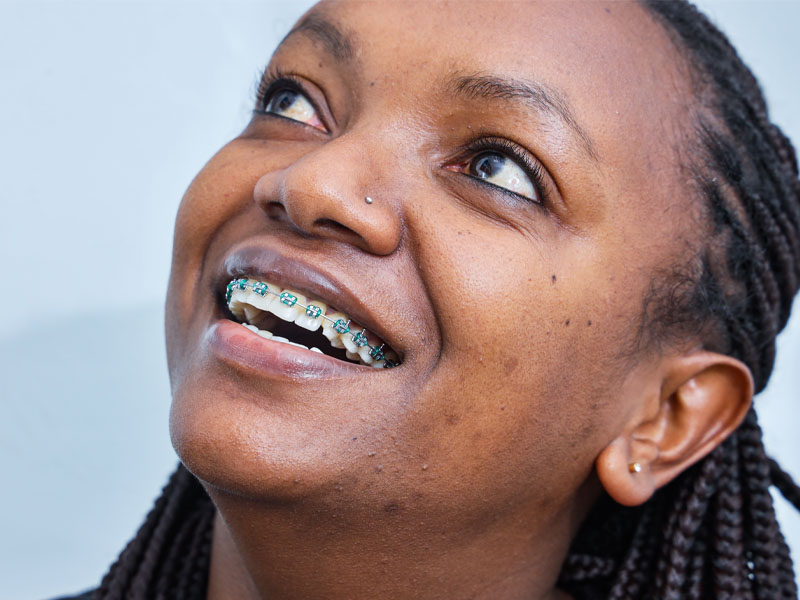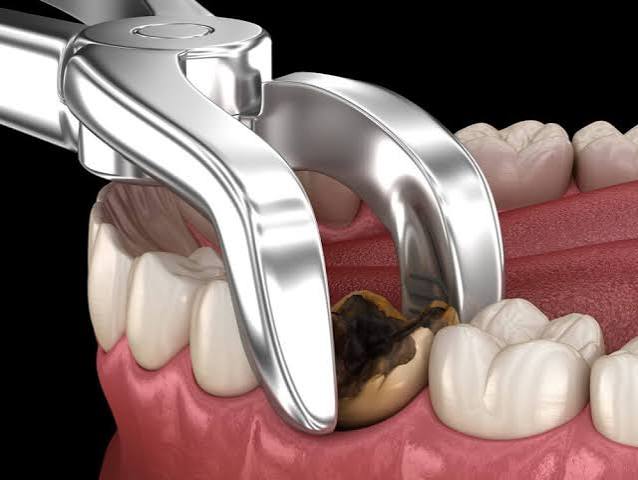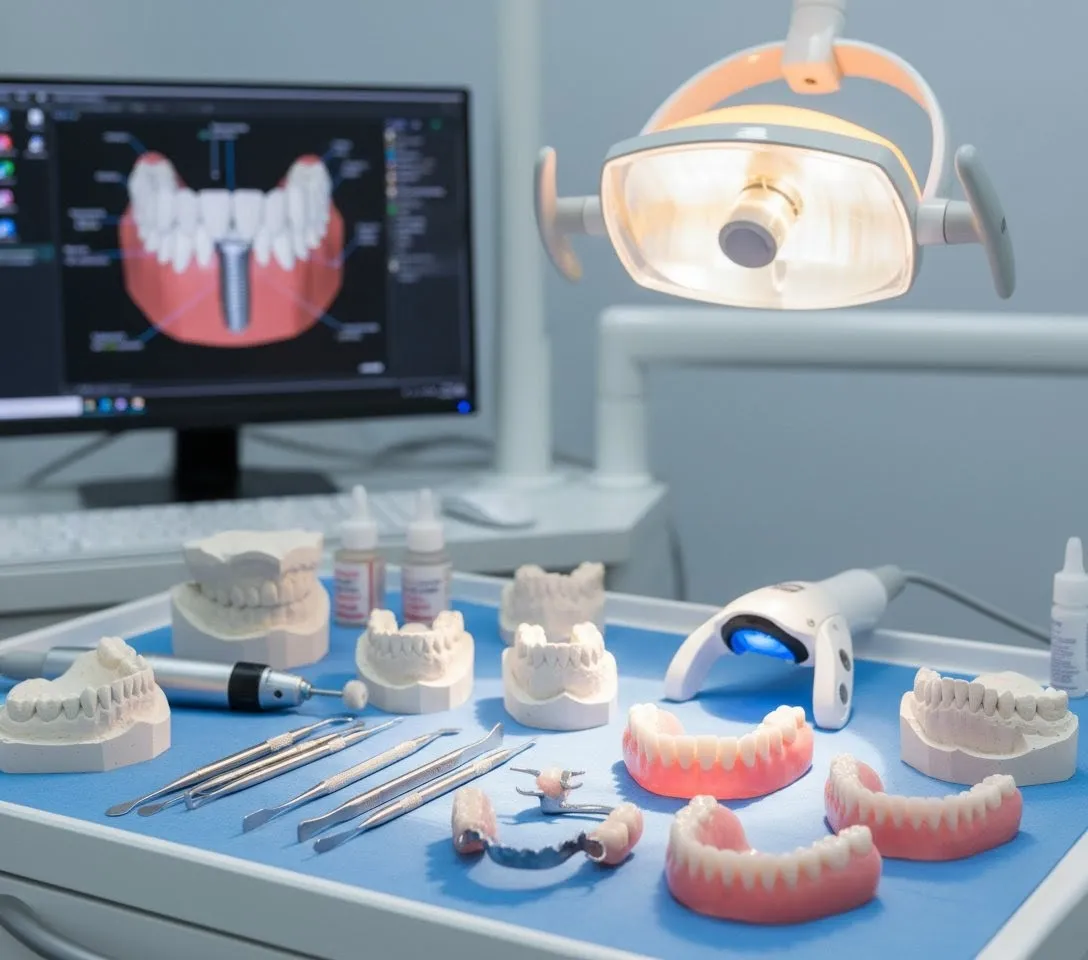
A missing tooth can affect more than the appearance of a smile. Depending on which tooth is missing and the person's bite, it may affect chewing, speech, confidence or the stability of neighbouring teeth. A badly damaged tooth may also need a restoration to protect what remains. Prosthodontic treatment helps restore the shape, function and appearance of teeth using carefully planned artificial replacements.
In Rwanda, the options a dentist may discuss include removable dentures, fixed dental bridges, crowns and dental implants. These treatments differ in cost, treatment time, maintenance needs and the amount of work required on existing teeth. This guide explains the options, what treatment usually involves, how results are maintained and how to approach pricing and insurance questions before committing to care in Kigali or elsewhere in Rwanda.
What Is Prosthodontics?
Prosthodontics is the area of dentistry concerned with restoring damaged teeth and replacing missing teeth or other oral structures. Treatment may involve a single crown, a bridge replacing one or several teeth, a removable partial denture, a complete denture or a restoration supported by dental implants. More complex cases may require collaboration between a general dentist and clinicians with additional training in restorative dentistry, oral surgery, periodontics or prosthodontics.
The objective is not simply to fill a gap. A good restoration should fit the patient's mouth, support comfortable chewing and speech, be maintainable with daily cleaning and fit the patient's longer-term dental health needs. Appearance matters too, but the dentist must balance appearance with function, gum and bone health, and the prognosis of the supporting teeth or implants.
When Should a Missing or Damaged Tooth Be Replaced?
Not every missing tooth must be replaced in exactly the same way, and the best plan depends on the individual situation. A dentist will consider the location of the gap, how the remaining teeth meet, whether the gap affects eating or speaking, the health of nearby teeth and gums, and the patient's preferences. A missing back tooth may affect chewing differently from a missing front tooth, while several missing teeth can make a denture or implant-supported option more practical than replacing each tooth separately.
Replacement may be considered when one or more teeth are missing, a tooth is too damaged to restore predictably, an existing denture or bridge no longer fits, or a restoration is needed after dental trauma or treatment for disease. A tooth that appears badly damaged is not always beyond saving; options such as a filling, onlay or crown may be possible depending on how much healthy tooth remains and whether the root and supporting tissues are healthy.
- A gap affects biting, chewing or pronunciation.
- A front-tooth gap has a significant effect on appearance or confidence.
- Several teeth are missing and the remaining teeth need a stable, maintainable bite.
- A damaged tooth needs protection after assessment and any necessary root canal treatment.
- An existing denture, crown or bridge is loose, broken, painful or difficult to clean.
Leaving a gap untreated can sometimes allow nearby teeth to drift or change how the teeth meet, but these changes do not occur in the same way for everyone. Your dentist can explain the likely consequences of replacing or not replacing the tooth in your particular mouth.
The Main Tooth-Replacement Options at a Glance
The main options are not interchangeable. A crown repairs a tooth that is still present; a bridge replaces a gap by attaching to supporting teeth or implants; a denture can be removed for cleaning; and an implant is a surgically placed root substitute that can support a visible replacement tooth. Some patients use a combination of these treatments.
| Option | How it works | Main advantages | Important considerations |
|---|---|---|---|
| Dental crown | A custom-made covering that fits over a damaged tooth or, in some cases, an implant abutment. | Can restore the shape, strength and appearance of a tooth when enough sound tooth structure remains. | Usually requires shaping the tooth; it does not replace a missing tooth root by itself. |
| Fixed dental bridge | One or more artificial teeth are supported by prepared neighbouring teeth or by dental implants. | Stays in place and can restore chewing and appearance without a removable appliance. | A conventional bridge may require reshaping supporting teeth and needs careful cleaning underneath. |
| Removable partial denture | A removable appliance replaces some missing teeth and uses the remaining teeth and/or oral tissues for support. | Can replace multiple teeth and is usually less invasive than implant surgery. | May move during use, need adjustment and require daily removal and cleaning. |
| Complete denture | A removable set of artificial teeth replaces all teeth in the upper jaw, lower jaw or both. | Can restore the appearance and some chewing function when all teeth in an arch are missing. | Fit and stability vary with gum shape and bone changes; adjustment or relining may be needed over time. |
| Implant-supported crown or bridge | One or more implants are placed in the jawbone and then support a crown, bridge or denture after healing. | Can avoid using neighbouring natural teeth as bridge supports and may improve retention for selected patients. | Requires surgery, sufficient or buildable bone, careful cleaning, follow-up and a higher initial investment in many settings. |
| Implant-retained removable denture | A removable denture clips or attaches to implants for additional retention. | Can be more stable than a conventional denture while still being removable for cleaning. | Needs implant surgery and maintenance of both the implants and attachment components. |
A dentist should explain why a recommended option fits your case, what alternatives are reasonable, and what could happen if treatment is delayed. The most expensive or most technologically advanced option is not automatically the best one for every patient.
Removable Dentures: Partial and Complete
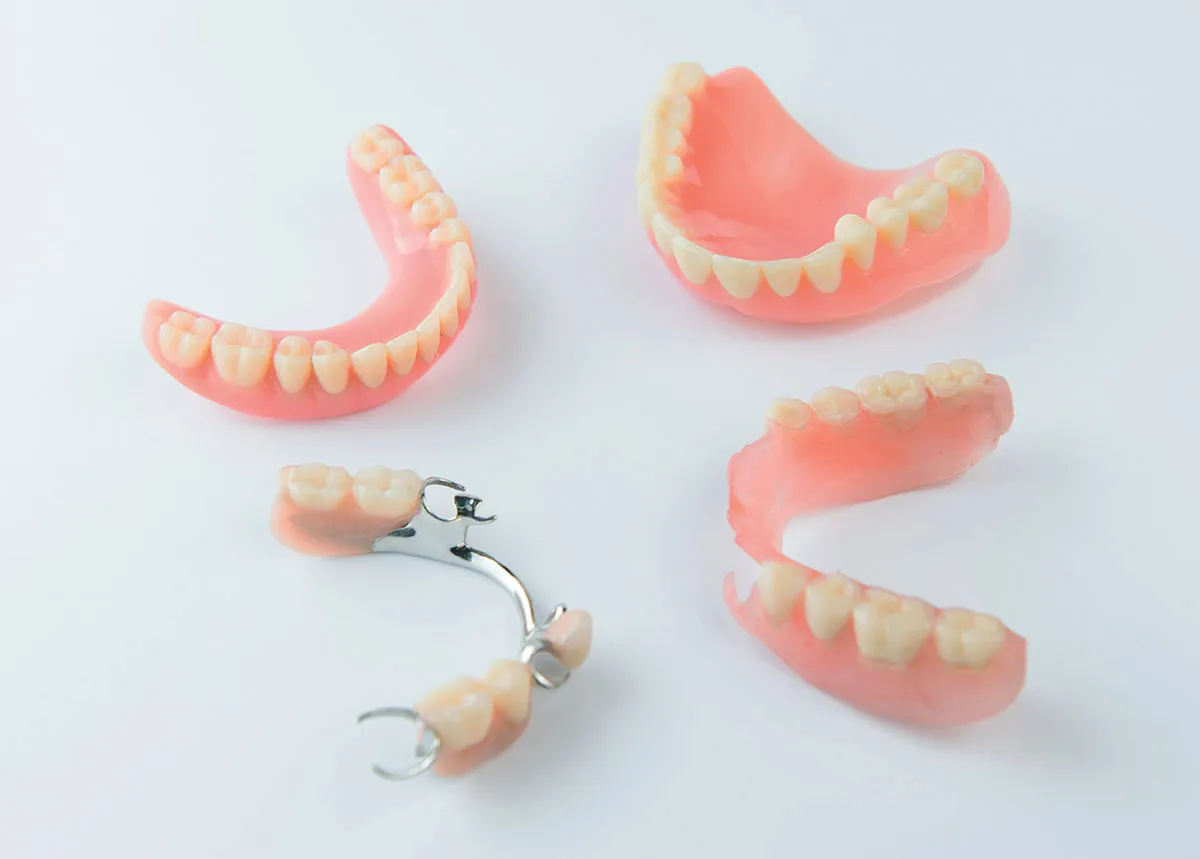
A denture is a custom-made removable appliance containing artificial teeth attached to a base that rests on the gums and other supporting structures. A partial denture replaces some missing teeth when other natural teeth remain. A complete denture replaces all teeth in an upper or lower arch. Dentures can be made from different materials and designs; the appropriate design depends on the mouth, remaining teeth, desired function and available treatment options.
Dentures can be useful when several teeth are missing, when a patient wants to avoid or cannot undergo implant surgery, or when the remaining teeth do not provide suitable support for a fixed bridge. They can improve appearance and help with speech and chewing, but they may not feel exactly like natural teeth. It can take time to learn to speak and chew comfortably, and some patients need follow-up adjustments as the mouth adapts.
- A partial denture may be suitable when some natural teeth remain and can help support or retain the appliance, depending on its design.
- A complete denture may replace all teeth in one arch or in both arches.
- An immediate denture may be planned for insertion around the time teeth are removed, but healing-related changes can mean it needs adjustment or replacement later.
- Some dentures use metal frameworks or more flexible materials; material selection should be based on clinical needs, repairability, comfort and cost, not marketing alone.
How Denture Treatment Usually Works
Denture treatment commonly starts with an examination of the gums, remaining teeth and bite. The dentist may take impressions or digital scans, record how the jaws meet, select tooth shapes and shades, and arrange a try-in before the finished denture is delivered. The number of visits depends on the case, the design, laboratory arrangements and whether other dental work is needed first.
After delivery, the dentist checks pressure areas, bite contacts and stability. Further visits may be needed to relieve sore spots or improve fit. The shape of the gums and jawbone changes after extractions and naturally changes over time, so a denture that once fitted well may loosen. Relining, repair or making a new denture may be recommended when adjustments can no longer provide an acceptable fit.
A denture should not be expected to last forever. Its lifespan depends on the material, wear, fit, changes in the mouth, breakage and how it is maintained. Ask the dentist how often it should be reviewed and what signs mean that it needs repair or replacement.
Dental Bridges: A Fixed Way to Replace a Gap
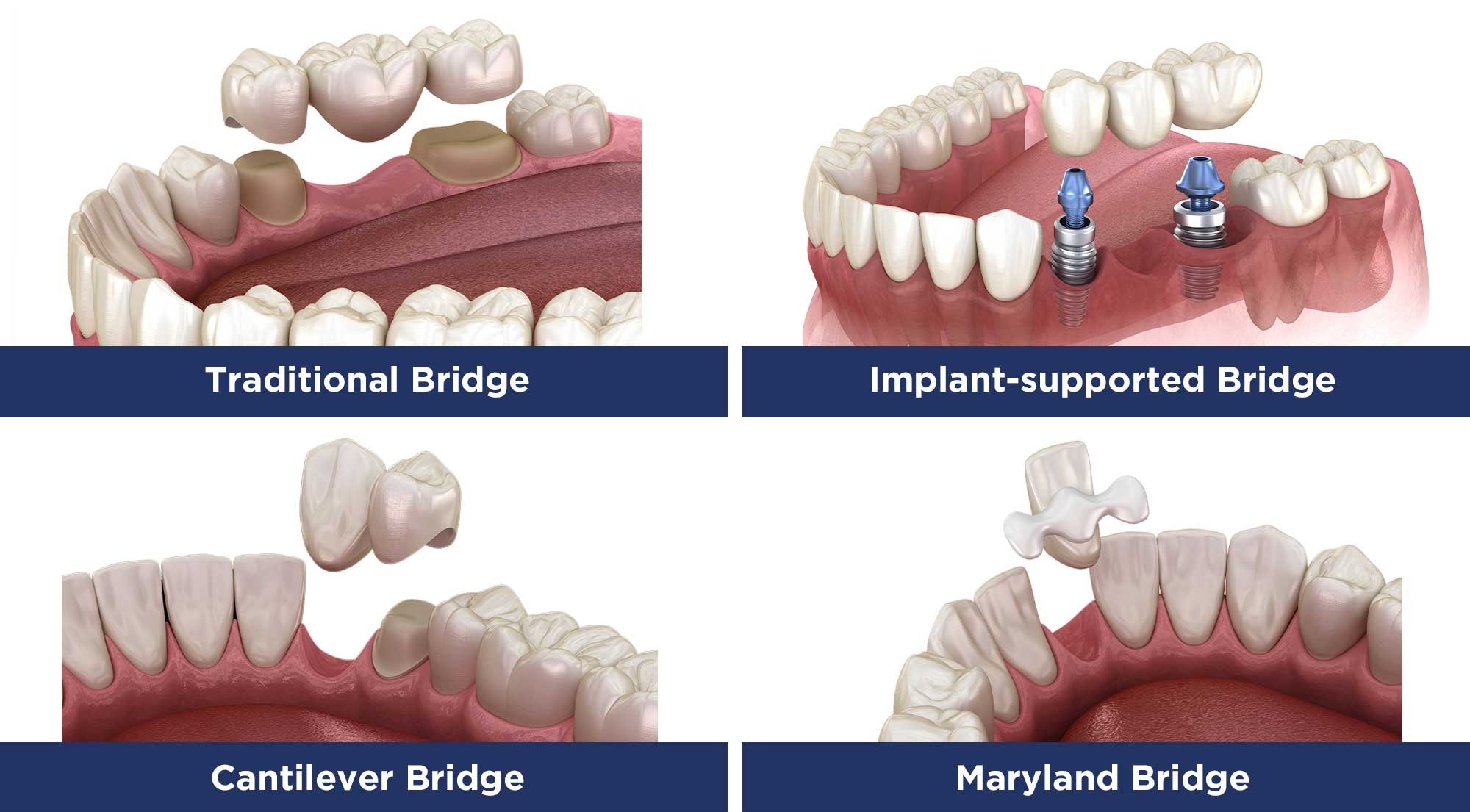
A dental bridge replaces one or more missing teeth with artificial teeth called pontics. A conventional bridge is supported by crowns placed over teeth on either side of the gap. Other designs include cantilever bridges, which use support on one side, resin-bonded bridges that attach to prepared surfaces of supporting teeth, and bridges supported by dental implants. Each design has specific indications and limitations.
A bridge is fixed in the mouth and may feel more like a natural tooth replacement than a removable appliance. A conventional bridge, however, often requires reshaping the supporting teeth. This can be a significant consideration if those teeth are otherwise healthy. A bridge also needs meticulous cleaning underneath the artificial tooth and around the margins of its supporting crowns, because plaque accumulation can lead to gum problems or decay in supporting natural teeth.
- A bridge may be considered when the gap is suitable for a bridge design and the supporting teeth or implants have a favourable prognosis.
- A conventional bridge may be less suitable when the neighbouring teeth are weak, mobile, badly decayed or affected by uncontrolled gum disease.
- A resin-bonded bridge may preserve more tooth structure in selected cases, but it can debond and is not suitable for every bite.
- An implant-supported bridge may replace several teeth without using natural teeth as supports, but it involves surgical planning and implant maintenance.
Dental Crowns: When a Tooth Is Damaged but Still Present
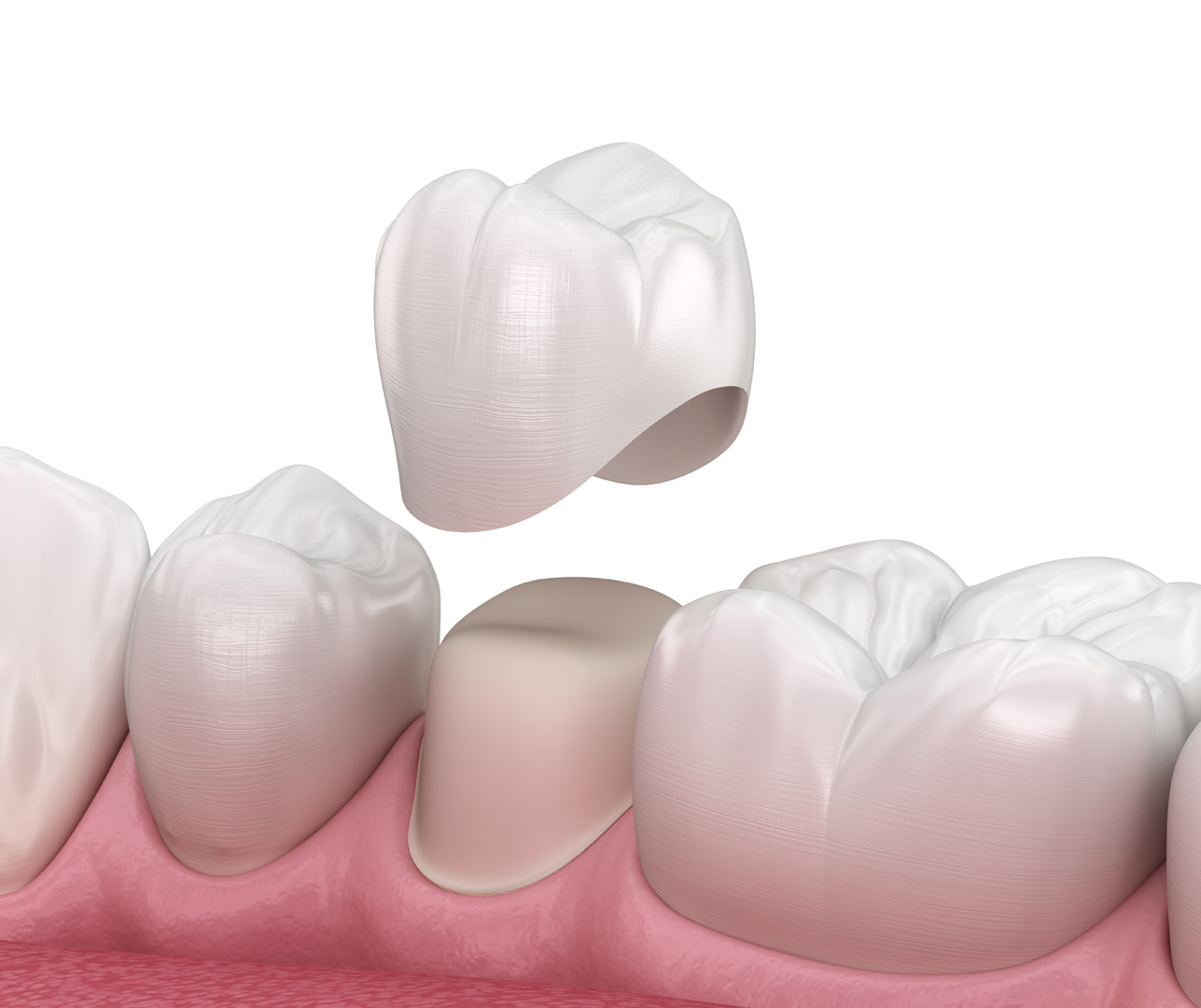
A crown is a custom-made restoration that covers much of the visible part of a tooth. It may be recommended when a tooth is weakened by extensive decay, a large filling, a fracture or root canal treatment, provided the remaining tooth and root can support the restoration. Crowns can also be used as part of a bridge or as the visible restoration attached to a dental implant.
Crowns may be made from metal, porcelain-fused-to-metal, zirconia or other ceramics and restorative materials. Each material has trade-offs in appearance, strength, space requirements, wear on opposing teeth and cost. The dentist will select a material based on the tooth's position, biting forces, appearance goals and the condition of the supporting structures.
A crown cannot rescue every badly damaged tooth. If too little sound tooth structure remains, the root is fractured, or supporting bone and gum are severely compromised, another treatment may be more predictable. Ask your dentist whether the proposed restoration is likely to preserve the tooth for a useful period and what alternatives exist.
Dental Implants: Replacing a Missing Tooth Root
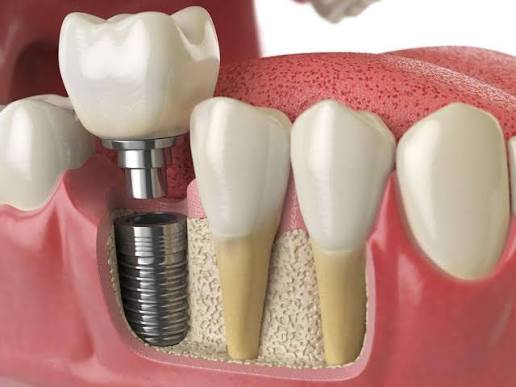
A dental implant is a small post, commonly made from titanium or another biocompatible material, that is placed surgically into the jawbone to act as an artificial tooth root. After healing and integration with the bone, it can support an abutment and a visible restoration such as a single crown, a bridge or a denture. An implant is not the same thing as the crown you see in the mouth: the post, connector and prosthetic tooth are separate components that may have separate costs and maintenance needs.
For a single missing tooth, an implant-supported crown may be an option if the neighbouring teeth are healthy and there is sufficient bone and gum tissue. Several implants can support a bridge or help retain a denture. Implant treatment may reduce the need to prepare adjacent natural teeth for a conventional bridge, and it can help maintain function in the area, but surgery, healing time, costs and ongoing cleaning have to be considered.
- A single implant can support one crown for one missing tooth.
- Multiple implants can support a fixed bridge when several teeth are missing.
- Implants may retain a removable denture, helping reduce movement in selected patients.
- A full-arch fixed implant-supported prosthesis may be possible for some people who have lost all teeth in an arch, but it requires detailed planning and ongoing professional maintenance.
Who May Be Suitable for Dental Implants?
Implant suitability depends on more than whether a tooth is missing. The dentist or implant team assesses the health of the gums, the amount and shape of jawbone, bite forces, spacing, oral hygiene, medical history, medications, smoking or tobacco use and the patient's ability to attend follow-up visits. X-rays and sometimes three-dimensional imaging are used when needed to plan the position safely and decide whether additional procedures might be required.
Many adults may be considered for implants, but implants are not automatically suitable for every person. Active gum disease should usually be treated before elective implant placement. Smoking, poorly controlled diabetes, some medicines and conditions affecting healing can increase risks or require extra planning. If there is insufficient bone, a clinician may discuss bone grafting or a different restoration. These factors do not always rule out treatment, but they can change the risks, sequence, cost and expected outcome.
How Dental Implant Treatment Works
Implant treatment is usually planned in stages, although the exact sequence varies. The team first assesses the mouth and reviews imaging. Any necessary treatment for gum disease, cavities or infection is completed, and extraction or bone-grafting procedures may be planned if needed. The implant is then placed in the jawbone under local anaesthesia, with sedation or other support used when clinically appropriate and available.
After placement, the implant generally needs a healing period before the final crown, bridge or denture is attached. Some carefully selected cases can receive a temporary or immediate restoration, but this is not appropriate for everyone. The timing depends on bone quality, stability at placement, the location of the implant, whether grafting was needed and the overall treatment plan. The dentist should explain whether you will have a temporary tooth during healing and what you can eat while the site recovers.
- Consultation, medical history, oral examination and suitable imaging.
- A written plan covering the implant site, restoration design, stages, alternatives, risks and itemised costs.
- Treatment of active decay or gum disease and any required extractions or bone preparation.
- Implant placement and postoperative instructions.
- A healing and review period, followed by the abutment and final restoration when appropriate.
- Long-term maintenance appointments to check the implant, gums, bite and prosthetic components.
Ask who will perform the surgical and restorative stages, whether the same clinic will coordinate the full plan, and whom to contact if you have pain, swelling or a loose component after treatment.
Does Getting Dentures, Bridges or Implants Hurt?
The experience depends on the procedure and individual sensitivity. Denture impressions and fitting are usually non-surgical, although a new denture can create sore areas while the mouth adapts. Preparing teeth for a conventional bridge or crown is performed with local anaesthesia. Implant surgery is also commonly carried out with local anaesthesia, so the procedure itself should not be painful, although pressure and vibration may be felt. Some soreness, swelling or bruising can occur afterwards.
Follow the instructions given by the treating clinician for pain relief, food, cleaning and activity after a procedure. Do not place aspirin, alcohol or unprescribed chemicals directly on the gums. Contact the clinic if pain worsens instead of improving, swelling increases, you develop fever or discharge, bleeding does not stop, or a restoration feels unstable. Difficulty breathing or swallowing, or rapidly spreading facial or neck swelling, requires urgent medical assessment.
Prognosis: How Long Can Each Option Last?
Prognosis means the likely course and durability of treatment. No crown, bridge, denture or implant is guaranteed to last for life. Longevity depends on the starting condition of the mouth, design and materials, bite forces, oral hygiene, gum health, smoking, general health, accidents, grinding or clenching, laboratory quality and routine maintenance. A restoration may need repair or replacement even when the underlying tooth or implant remains healthy.
Removable dentures may need adjustment, relining or replacement as the jaw and gums change. Bridges can last many years, but decay or gum disease in a supporting tooth, loss of support or damage to the bridge can lead to complications. Implants can also function for many years, but the surrounding tissues can become inflamed, the implant may fail to integrate or lose support, and screws, attachments or crowns may loosen or wear. The implant post and the visible restoration do not necessarily have the same lifespan.
The best way to improve prognosis is to begin with a realistic treatment plan, treat existing disease, clean as demonstrated, avoid tobacco, manage relevant medical conditions with your healthcare team and attend follow-up visits. Ask your dentist what success looks like in your case, what complications are most relevant and how often the restoration should be reviewed.
Cleaning and Maintaining Your Replacement Teeth
Daily care helps protect the gums, remaining natural teeth and replacement itself. The right technique depends on whether the restoration is removable or fixed. Ask the team to demonstrate the tools that fit your mouth; a technique that works for a complete denture may not be enough for a bridge or an implant-supported fixed bridge.
| Restoration | Daily care | Professional follow-up |
|---|---|---|
| Removable denture | Remove and clean it daily with a denture brush and a product recommended for its material. Clean your gums, tongue and remaining teeth as well. Follow the dentist's advice about overnight storage and soaking; not all materials tolerate the same products. | Attend reviews for sore areas, looseness, cracks, bite changes or a denture that no longer fits. Never repair or bend it yourself. |
| Fixed bridge | Brush twice daily with fluoride toothpaste. Clean underneath the pontic and around supporting teeth using an appropriate floss threader, superfloss or interdental brush. | The dentist checks the supporting teeth, gums, margins, bite and whether the bridge remains stable. |
| Crown | Brush twice daily and clean between the teeth. Pay special attention to the gumline around the crown. | Have the crown and underlying tooth checked for looseness, cracks, decay at the margin or bite changes. |
| Implant crown or bridge | Brush carefully along the gumline and use implant-safe interdental brushes, floss or other tools demonstrated by the clinician. Clean under fixed bridges where accessible. | Attend implant maintenance visits to check gum health, bone support when indicated, bite forces and the condition of screws, attachments and the prosthesis. |
Possible Risks and Complications
All dental treatment has benefits and limitations. The risks differ by procedure, and your dentist should explain those relevant to your case before you consent. Possible problems include:
- Dentures: sore spots, looseness, difficulty chewing or speaking at first, fracture, wear or changes in fit as the mouth changes.
- Bridges and crowns: sensitivity, chipping or fracture, loosening, decay or gum disease around supporting teeth, or a need to replace the restoration.
- Implants: infection, bleeding, pain or swelling after surgery, delayed or failed integration with bone, injury to nearby structures, gum recession, inflammation or loss of supporting bone, and loosening or wear of components.
- Any restoration: a result that does not meet expectations for appearance, comfort or function, which is why the plan, alternatives and likely limitations should be discussed beforehand.
Risks can often be reduced by treating active dental disease first, selecting the right case, using sound clinical planning, following postoperative instructions and maintaining regular care. If a restoration breaks, becomes loose or starts hurting, seek dental advice rather than continuing to use it as normal.
How Much Do Dentures, Bridges and Implants Cost in Rwanda?
There is no single price for all prosthodontic treatment. The total depends on how many teeth need replacement, the condition of the remaining teeth and gums, the type and material of the restoration, laboratory costs, imaging, extractions, gum treatment, bone grafting, temporary restorations, the number of visits and follow-up care. An implant quote may need to separate the implant post, surgical placement, abutment, crown or bridge, grafting and maintenance rather than presenting one vague 'implant price'.
- Ask whether consultation, X-rays or scans, extractions, gum treatment and temporary teeth are included or charged separately.
- For bridges and crowns, confirm the material, the number of units and whether laboratory work, temporary restorations and fitting visits are included in the quoted fee.
- For implants, ask for separate costs for the implant fixture, surgery, abutment, crown or bridge, any bone graft, temporary restoration and maintenance visits.
- For dentures, ask what material and design are included, whether try-in and adjustments are covered, and what relining or repair may cost later.
- Request an itemised written quotation and ask which fees could change if the clinician discovers additional problems during treatment.
Does Health Insurance in Rwanda Cover Dentures, Bridges or Implants?
Insurance benefits depend on the scheme, the specific treatment, the facility, any exclusions or limits and whether prior authorisation is required. RSSB's public medical-scheme page lists dental care and prosthesis among its benefit categories and states that RSSB covers 85% of eligible medical services, with the beneficiary paying the remaining 15%. That public summary does not specify whether every type of crown, bridge, removable denture, implant surgery or implant-supported restoration is eligible in every situation.
For RAMA/RSSB, do not assume that the general dental-care or prosthesis wording automatically confirms payment for your entire planned treatment. Ask RSSB or the insurer's medical advisor to confirm the precise procedure codes, provider requirements, materials, limits, co-payment and approval process. Other insurance products, including employer and private plans, can have different rules. Check the patient's exact policy rather than relying on a general statement about dental coverage.
- Obtain a written treatment plan and itemised quote from the clinic.
- Ask the insurer whether the proposed service is covered and whether the treating facility or clinician must be on its approved provider list.
- Confirm pre-authorisation requirements before treatment, especially for implants, laboratory-made restorations or expensive materials.
- Ask what the patient will pay, including exclusions, annual limits, co-payments and services that may need to be paid privately.
- Keep the written approval and claim documents, and reconfirm coverage if the treatment plan changes.
How to Choose Between a Denture, Bridge and Implant
The best choice balances clinical suitability, expected function, maintenance, appearance, cost and your preferences. For example, a removable partial denture may be a practical way to replace several teeth without surgery. A bridge may be appropriate when the supporting teeth are healthy enough and the gap is suitable. An implant may be considered where bone and gum conditions allow, particularly when avoiding preparation of adjacent natural teeth is desirable. If a tooth can be saved predictably, a crown or another restoration may be preferable to extraction and replacement.
Ask the dentist to compare at least the reasonable alternatives for your case, including doing nothing for now when that is a safe option. Discussion should cover the advantages and disadvantages, expected treatment sequence, likely maintenance, complications, total anticipated cost and what could require future replacement. If several teeth are missing or the case is complex, a referral or second opinion may help you make an informed choice.
- How many teeth are missing, and where are they located?
- Are the neighbouring teeth and gums healthy enough to support a bridge?
- Is there enough bone for an implant, or would additional surgery be needed?
- Can you comfortably remove, clean and maintain a denture if that option is recommended?
- What is the expected prognosis of the existing teeth and the proposed replacement?
- What is the complete cost, what does insurance approve, and what future repairs or maintenance might be required?
Questions to Ask Your Dentist Before Treatment
- What is the diagnosis, and can the damaged tooth be saved instead of removed?
- What are my realistic treatment options, including the advantages and disadvantages of each?
- Who will do the surgical and restorative stages, and who should I contact after hours if there is a problem?
- What does the quote include, and which items may be billed separately?
- Has the insurer confirmed coverage for the exact procedure and materials in writing?
- How long will treatment take, how many visits will be needed, and will I have a temporary tooth?
- What daily cleaning tools should I use, and how often will I need professional maintenance?
- What problems should prompt an urgent review, and what is the plan if the restoration fails or needs repair?
Myths and Facts About Tooth Replacement
- Myth: An implant lasts forever. Fact: An implant can function for many years, but gum and bone problems or wear and loosening of components can occur. Regular maintenance is essential.
- Myth: A bridge is always better than a denture. Fact: The better option depends on the gap, supporting teeth, gum health, bite, cost and maintenance preferences.
- Myth: A denture should never move or cause soreness. Fact: Some initial adaptation is common, but repeated soreness, instability or pain should be assessed and adjusted professionally.
- Myth: If I have an implant, I no longer need dental check-ups. Fact: Implants and their restorations need regular professional checks and daily cleaning.
- Myth: Every badly damaged tooth must be extracted. Fact: Some teeth can be repaired with a filling, onlay, root canal treatment and/or crown. The dentist must assess whether saving the tooth is predictable.
When Should You Seek Dental Advice Promptly?
Arrange a dental review if an existing denture, crown or bridge becomes loose, cracks, repeatedly rubs the gums or causes pain, or if you notice bleeding, swelling, pus, persistent bad taste or difficulty chewing around a restoration. Prompt assessment may help identify a problem before it becomes more complicated.
Prosthodontic Consultations at DentRW
If you are missing one or more teeth or have a damaged restoration, a dental consultation can help clarify what is possible before you commit to a treatment. The clinician can assess your oral health, discuss whether the tooth may be saved, explain suitable replacement options and identify any investigations or preliminary treatment needed first.
For patients considering dentures, bridges, crowns or implants, ask for a written treatment plan and itemised estimate. DentRW recommends confirming the applicable tariff and insurance authorisation before starting treatment, especially when the plan includes laboratory-made restorations, surgery, bone grafting or multiple appointments.
Book a dental consultation with DentRW to discuss missing or damaged teeth, available restoration options and the next steps for your individual case.
Frequently asked questions
What is prosthodontics?
Prosthodontics is the area of dentistry that restores damaged teeth and replaces missing teeth. Treatments include crowns, fixed bridges, removable partial or complete dentures, and implant-supported crowns, bridges or dentures.
What is the difference between a crown, a bridge and a denture?
A crown covers and restores a tooth that is still present, or may fit on an implant abutment. A bridge replaces a gap with artificial teeth supported by natural teeth or implants. A denture is a removable appliance that replaces some or all teeth in an arch.
Are dental implants better than dentures or bridges?
Not for everyone. Implants may provide stable support and avoid preparing neighbouring teeth for a conventional bridge, but they require surgery, adequate or buildable bone, careful maintenance and usually a higher initial investment. Dentures and bridges may be more appropriate in other situations. A clinical assessment is needed to compare options for your mouth.
How long do dental implants last?
Dental implants can function for many years, but no implant or restoration is guaranteed to last for life. The result depends on gum health, bone support, smoking, general health, bite forces, cleaning and regular maintenance. The implant post and the crown or bridge it supports may have different lifespans.
How long does dental implant treatment take?
It varies by case. Treatment may involve consultation and imaging, any needed gum treatment or bone grafting, implant placement, a healing period and fitting the final crown, bridge or denture. Some cases can be restored sooner, while others need several months or additional procedures. Your clinician should explain the estimated sequence for your case.
Can anyone get dental implants?
No. The clinician needs to assess gum health, bone volume, medical history, medicines, smoking, oral hygiene and the ability to attend follow-up appointments. Some people need gum treatment, bone grafting or a different restoration first. These factors should be discussed individually rather than used to self-diagnose suitability.
Will an implant procedure hurt?
Implant placement is commonly performed with local anaesthesia, so the surgery itself should not be painful, although pressure may be felt. Soreness or swelling can occur afterwards. Follow the clinician's aftercare instructions and contact the clinic if pain is worsening, swelling increases, fever develops or bleeding does not stop.
How long do dentures last?
There is no fixed lifespan. Dentures wear down and the gums and jawbone can change shape, so an appliance may need adjustment, relining, repair or replacement. Have it checked if it becomes loose, painful, cracked or difficult to use.
Are dental bridges permanent?
A fixed bridge is not removable by the patient in normal use, but it is not guaranteed to last forever. Supporting teeth can develop decay or gum disease, and bridges may chip, loosen or need replacement. Cleaning underneath the bridge and attending dental reviews are important.
Does insurance cover dental implants in Rwanda?
Coverage depends on the insurer, the exact plan, the clinical indication, exclusions, limits, materials and pre-authorisation requirements. Do not assume that general dental coverage includes implant surgery and every part of the final restoration. Ask the insurer to confirm the procedure and the patient's share in writing.
How do I clean a removable denture?
Remove and clean it daily with a denture brush and a cleaning product recommended for its material. Also clean your gums, tongue and any remaining teeth. Follow your dentist's storage instructions and arrange a review if the denture hurts, becomes loose or cracks.
How do I clean under a dental bridge or around an implant?
Brush twice daily and use the floss threader, superfloss, interdental brush or implant-cleaning tool recommended for your restoration. The technique depends on the design. Ask the team to demonstrate it and check your technique at maintenance visits.
Do I need to replace every missing tooth?
Not always, and not every gap requires the same treatment. The decision depends on the location of the gap, chewing function, bite, likely movement of other teeth, appearance, the condition of the remaining teeth and your preferences. A dentist can explain the likely benefits and risks of replacing or monitoring the gap.
Sources
- 1.Prosthodontics: Definition, Uses & Types (opens in a new tab), Cleveland Clinic (2026)
- 2.What Are Dentures? Types, Care & Benefits (opens in a new tab), Cleveland Clinic
- 3.Dental Bridges: Types & Who Needs Them (opens in a new tab), Cleveland Clinic (2023)
- 4.Dental Implants: Types, Purpose & Benefits (opens in a new tab), Cleveland Clinic (2026)
- 5.Dental implants: risks, consent and other treatment options (opens in a new tab), Guy's and St Thomas' NHS Foundation Trust (2024)
- 6.RSSB Medical Scheme (RAMA): Medical Insurance Coverage (opens in a new tab), Rwanda Social Security Board (2026)
- 7.Ministerial Instruction Establishing Tariff of Health Services for Public and Private Health Facilities (opens in a new tab), Rwanda Ministry of Health (2025)
This article is for general information and does not replace advice from a dentist who knows your health history.