Dental emergencies rarely happen at a convenient time. They happen at weekends, on holidays and in the middle of the night. Knowing what to do in the first minutes can decide whether a tooth is saved, and whether a problem stays small.
At DentRW we reserve appointment slots every day for emergencies, because we know how quickly things can get worse. Here is what to do in the most common situations.
How urgent is it?
| Situation | How urgent | Where to go |
|---|---|---|
| Swelling spreading to the eye or neck, or trouble breathing, swallowing or speaking | Immediately | Hospital emergency department |
| Knocked-out adult tooth | Within the hour | Dentist straight away |
| Swollen face or gum with fever or a bad taste | Same day | Dentist |
| Tooth pushed out of position or very loose after a knock | Same day | Dentist |
| Broken or cracked tooth with pain | Same day | Dentist |
| Toothache lasting more than 2 days, or not eased by painkillers | Within a day or two | Dentist |
| Lost filling or crown without pain | Within a few days | Dentist |
Swelling you should never wait out
A dental infection that spreads like this can block the airway. Go to the nearest hospital emergency department, or call 912 (SAMU, free, 24 hours) for an ambulance. Do not drive yourself.
Severe toothache or a dental abscess
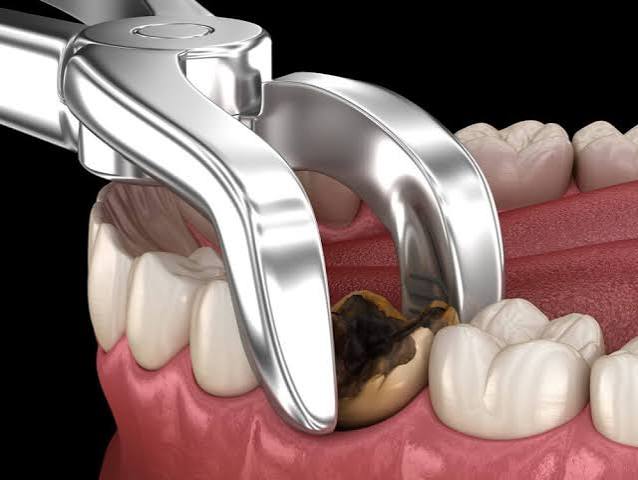
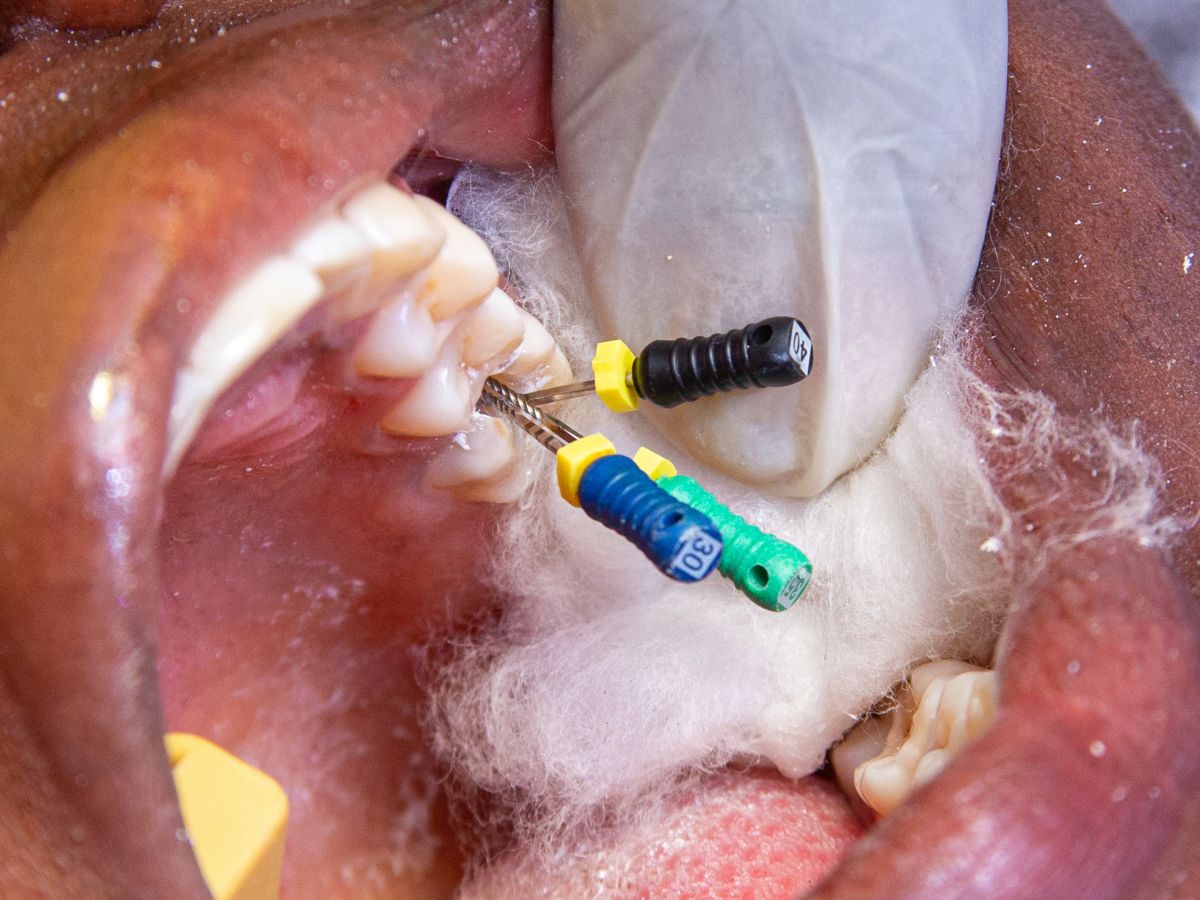
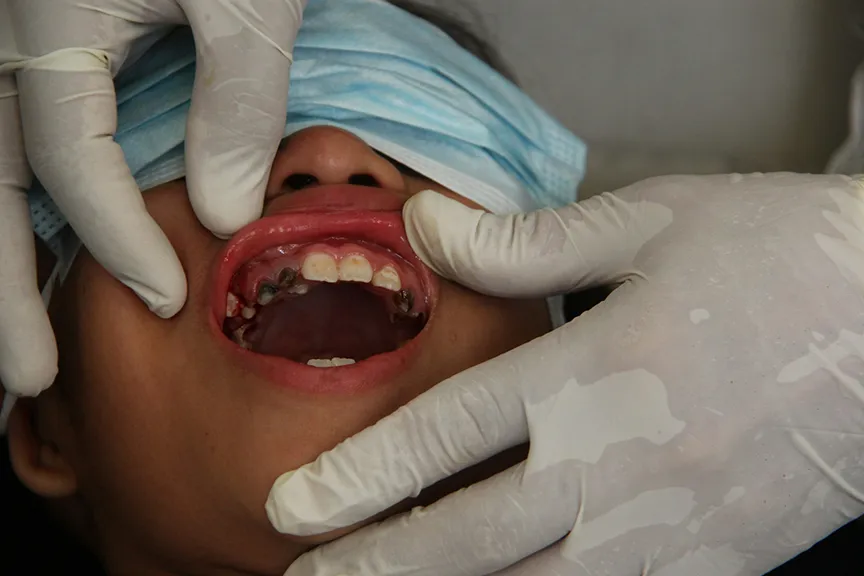
A throbbing toothache, especially with swelling, fever, a bad taste, or pain when you bite, can mean an abscess: a collection of pus caused by infection. An abscess does not go away on its own. It needs a dentist to drain it and treat the cause, usually with root canal treatment or extraction.
While you wait for your appointment:
- Take paracetamol or ibuprofen as directed on the packet, if they are safe for you. Children under 16 should not take aspirin.
- Rinse with warm salt water: half a teaspoon of salt in a glass of warm water. Children should not try this.
- Eat soft food and chew on the other side. Avoid very hot, very cold and sweet food.
- Do not smoke.
- Do not put an aspirin or any other tablet on the gum. It burns the tissue.
Knocked-out adult tooth
Time matters more here than in any other dental emergency. A tooth put back quickly has the best chance of surviving.
- Find the tooth. Hold it by the white part (the crown), never by the root.
- If it is dirty, rinse it gently in milk, saline or saliva. Do not scrub it, and do not wrap it in tissue.
- Try to push it back into the socket, the right way round.
- If it goes back in easily, bite gently on a clean cloth to hold it in place.
- If you cannot put it back, keep it in milk, or in the person's own saliva (spit into a small container). Do not keep it in water.
- Come to a dentist straight away. Bring the tooth with you.
Even if you cannot find the tooth, see a dentist urgently. The socket and the teeth next to it need checking. At the clinic, we check the tooth's position, take an X-ray, and usually splint it to the teeth on either side for a couple of weeks. Most replanted adult teeth need root canal treatment afterwards.
Knocked-out baby tooth
Chipped, cracked or broken tooth
- Rinse your mouth with warm water.
- Hold a cold compress against your cheek to reduce swelling.
- Keep any broken pieces in milk or water and bring them. Sometimes a fragment can be bonded back on.
- Avoid chewing on that side, and avoid very hot or cold food.
Treatment depends on how deep the break goes. A small chip may only need smoothing or bonding. A deeper break may need a crown, and a break that reaches the nerve usually needs root canal treatment. A tooth that is sharp, painful, or pink in the middle should be seen the same day.
Tooth pushed out of place or loosened
After a fall or a blow, a tooth may be pushed in, out, or sideways, or may simply feel loose. Do not try to force it back into position. Bite gently on a clean cloth to keep it steady and see a dentist the same day. Loose teeth often settle after the dentist repositions and splints them.
Lost filling or crown
- Keep the crown if you have it and bring it with you. It can often be cleaned and re-cemented.
- Temporary dental filling material from a pharmacy can cover a sharp or sensitive tooth for a few days. Do not use household glue.
- Avoid sticky, very hot and very cold food on that side.
Do not leave the tooth unprotected for long. The exposed inner layer decays quickly, and a small repair can turn into a bigger one.
Cut lip, tongue or cheek
Mouth injuries bleed a lot, but most stop with firm pressure. Press a clean, damp cloth on the wound for 10 to 15 minutes. Hold a cold compress against the outside of the lip or cheek. If bleeding does not stop after 15 to 20 minutes of steady pressure, or the cut is deep or gaping, go to a hospital emergency department.
How to reach DentRW in an emergency
Call us on +250 785 577 189. We are in Kicukiro, Kigali, open Monday to Saturday, and we keep slots every day for urgent cases so we can see you the same day. When we are closed, call the same number for guidance on what to do next. You can also book online and choose "Emergency Dentistry".
When you arrive, we assess the problem, relieve the pain, and explain your options and costs before any treatment. Read more about emergency dentistry at DentRW.
Preventing emergencies
- Wear a mouthguard for football, basketball, rugby, boxing and other contact sports.
- Do not use your teeth to open bottles or packets, or to bite hard objects like pens.
- Avoid chewing ice and hard sweets.
- Come for regular check-ups, so weak fillings, cracks and early infections are found before they break or flare up.
- If a tooth starts to feel sensitive, sore or different, come in early, before it becomes urgent.
Frequently asked questions
How quickly do I need to see a dentist for a knocked-out tooth?
Immediately. Put an adult tooth back in the socket or keep it in milk or saliva, and come straight to a dentist. The sooner it is replanted, the better its chance of surviving.
Should I go to a hospital or a dentist?
Go to hospital if swelling is spreading towards your eye or neck, if you have trouble breathing, swallowing or speaking, or if bleeding will not stop. For toothache, broken teeth, knocked-out teeth and lost fillings, see a dentist.
Can I take antibiotics for a toothache?
Antibiotics do not fix the cause of toothache. If there is an infection, a dentist needs to drain it and treat the tooth. Painkillers such as paracetamol or ibuprofen, taken as directed, can help while you wait.
Does DentRW see emergency patients without an appointment?
Yes. We keep same-day emergency slots, Monday to Saturday. Call +250 785 577 189 before you come so we can prepare, or book online and choose "Emergency Dentistry".
Sources
- 1.Knocked-out tooth (opens in a new tab), NHS
- 2.Toothache (opens in a new tab), NHS
- 3.Dental abscess (opens in a new tab), NHS
- 4.The Dental Trauma Guide (opens in a new tab), International Association of Dental Traumatology
- 5.Dental emergencies (opens in a new tab), American Dental Association (MouthHealthy)
This article is for general information and does not replace advice from a dentist who knows your health history.