Whitening is one of the most requested cosmetic treatments at DentRW. It can make a real difference to how people feel about their smile, but not every option is safe, and not every tooth will whiten. This guide explains the choices honestly so you can decide what is right for you.
Why teeth change colour
Tooth discolouration falls into two groups, and the difference decides whether whitening will help.
- Surface (extrinsic) stains sit on the enamel. They come from tea, coffee, red wine, cola, some spices and tobacco. These respond well to whitening.
- Deep (intrinsic) discolouration is inside the tooth. It comes from ageing, a knock that damaged the nerve, some medicines taken in childhood, or too much fluoride while teeth were forming. Whitening may help a little, but bonding or veneers often give a better result.
A single tooth that has turned grey or dark is a special case. It often means the nerve inside has died, which should be checked with an X-ray before any cosmetic treatment.
How whitening works
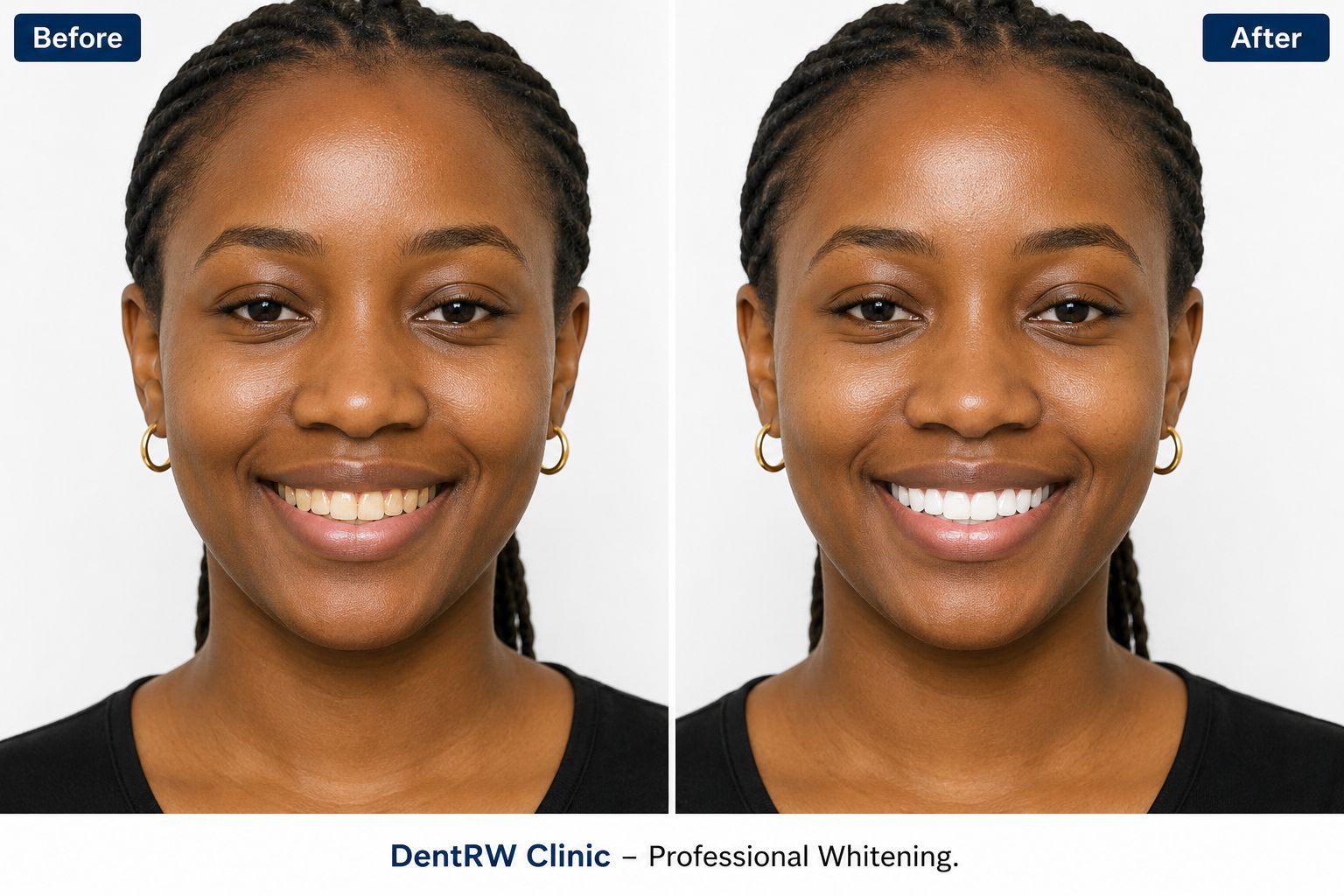
Whitening gels contain hydrogen peroxide or carbamide peroxide, which breaks down into hydrogen peroxide. The peroxide passes into the enamel and breaks stain molecules into smaller, less visible pieces. The tooth structure itself is not removed. That is why whitening is different from polishing or scaling, which only clean the surface.
Your options compared
| Option | How it works | Results | Main drawback |
|---|---|---|---|
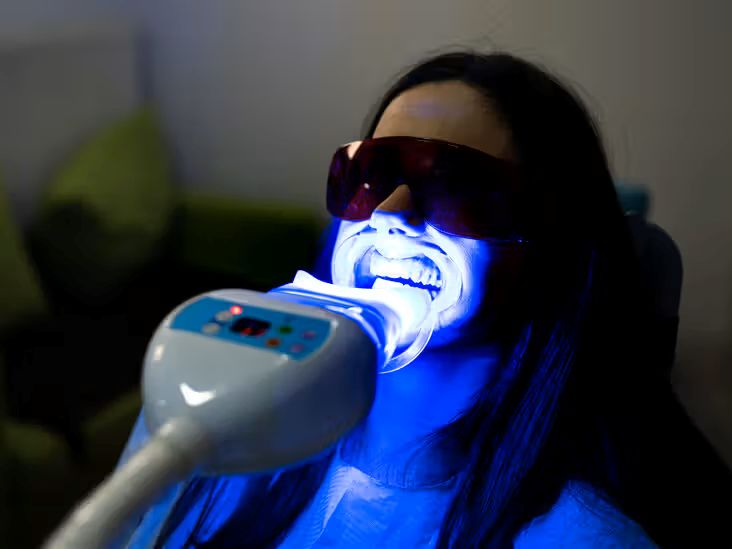
| In-clinic whitening | Stronger gel applied by a dentist, with a barrier protecting your gums | Visible after one visit, often several shades lighter | Temporary sensitivity is more common |
| Custom take-home trays | Trays made to fit your teeth, used with a lower-strength gel at home for 1 to 2 weeks | Similar results to in-clinic, reached gradually | Needs daily commitment |
| Whitening strips and pens | Low-strength gel on a strip or brush | Modest improvement for mild surface stains | Uneven coverage, especially on crowded teeth |
| Whitening toothpaste | Mild abrasives and polishing agents | Removes some surface stain; does not change the tooth's own colour | Very limited effect |
| Charcoal powders | Abrasive particles | No good evidence that they whiten | Can wear enamel and irritate gums |
Whitening at DentRW
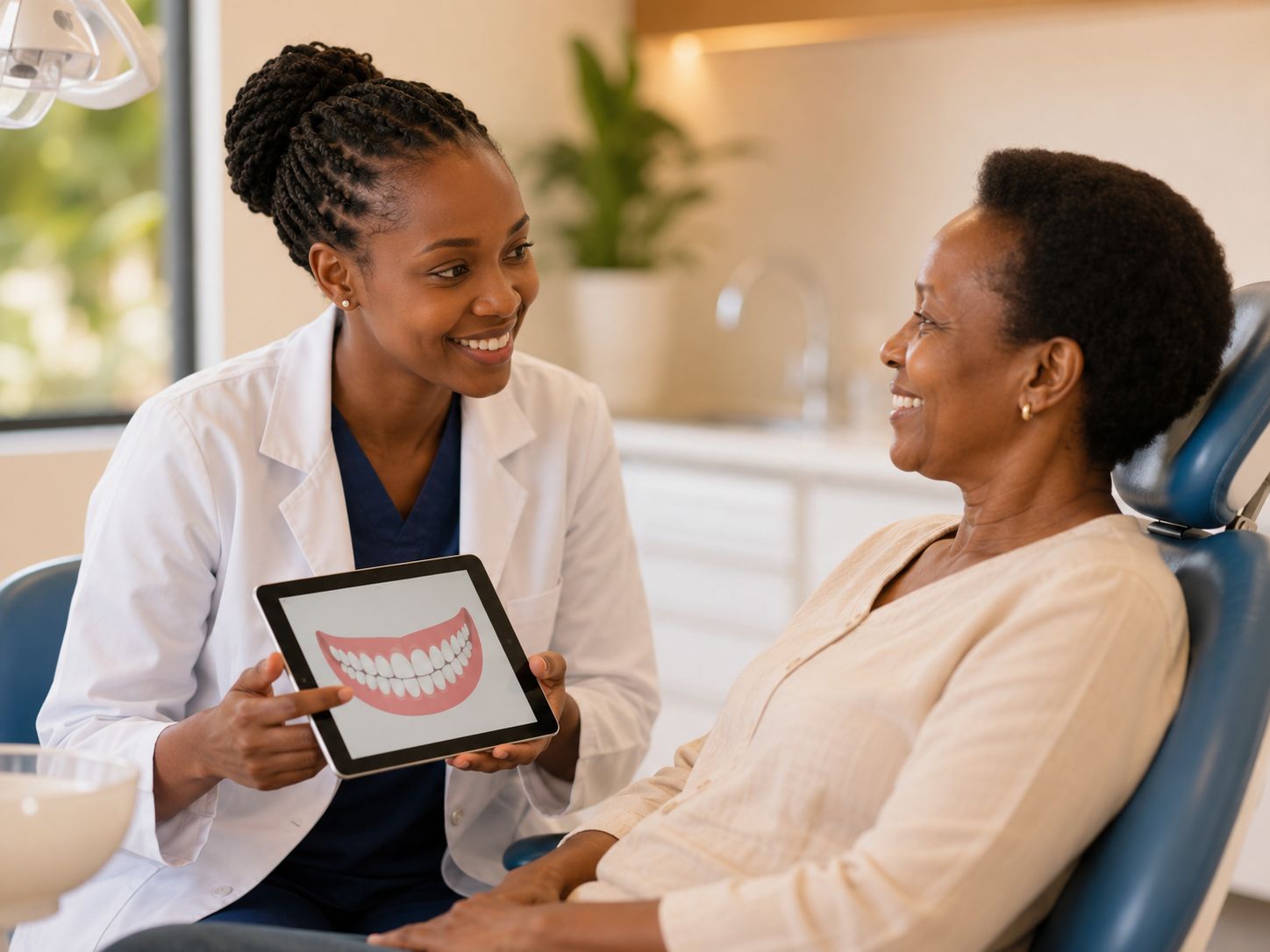
Every whitening treatment starts with a short consultation. We check for decay, gum disease, cracked teeth and existing fillings or crowns, note your current shade, and work out what is causing the discolouration. That tells us whether whitening will give you the result you want.
We offer in-clinic whitening for a faster result, and custom take-home trays for gradual whitening at your own pace. Some patients combine the two. Your gums are protected during in-clinic treatment, and we give you clear aftercare advice to keep the results. Read more on our teeth whitening page.
Is whitening safe?
Whitening is safe for most adults when it is done or supervised by a dentist, using the right concentration for the right length of time. The two common side effects are:
- Sensitivity to cold or hot for a day or two. A sensitive-teeth toothpaste used for a week or two beforehand can help. Tell us if it lasts longer.
- Gum irritation where gel touches the gums. This is usually mild and short-lived, and is less likely with trays that fit properly.
Who should not whiten, or should wait
- People who are pregnant or breastfeeding should wait.
- Children and younger teenagers, whose teeth are still developing.
- Anyone with untreated decay, gum disease, cracked teeth or exposed roots. These need treating first.
- People with crowns, veneers or tooth-coloured fillings on front teeth, who should know these will not change colour and may need replacing afterwards to match.
- People with very sensitive teeth or worn enamel, who need a check before deciding.
Making your results last
No whitening is permanent. How long it lasts depends mostly on what you eat and drink, and whether you smoke.
- Avoid strongly coloured food and drinks for 48 hours after treatment, when teeth pick up stain most easily.
- Rinse with water after tea or coffee, and drink cold coloured drinks through a straw.
- Stop smoking. It is the fastest way to lose a whitening result, and the best thing you can do for your gums.
- Keep up brushing twice a day and regular professional cleans.
- Use your take-home trays for occasional touch-ups, as your dentist advises.
Want to know what whitening could do for you? Book a whitening consultation and we will check your teeth and talk you through the options.
Frequently asked questions
Does whitening damage enamel?
Supervised whitening with the right concentration does not remove enamel. The risks come from products of unknown strength, overuse, and abrasive powders. Temporary sensitivity is common and usually settles within a few days.
How long does whitening last?
It varies from months to a few years, depending mainly on tea, coffee and tobacco use. Occasional touch-ups with take-home trays help keep the shade.
Will whitening work on my crown or filling?
No. Only natural teeth whiten. If you have crowns, veneers or tooth-coloured fillings on your front teeth, we will plan around them, which sometimes means replacing them after whitening so they match.
Can I whiten my teeth if they are sensitive?
Often yes, with preparation. We may suggest a sensitive-teeth toothpaste beforehand, a lower-strength gel, or shorter sessions. We check the cause of the sensitivity first.
Sources
- 1.Teeth whitening (opens in a new tab), American Dental Association (MouthHealthy)
- 2.Whitening (opens in a new tab), American Dental Association
This article is for general information and does not replace advice from a dentist who knows your health history.